For more than 30 years, websites have been the foundation of a business's online presence. They help customers learn about a company, explore products and services, and decide whether to get in touch.
That hasn't changed.
What has changed is how customers discover businesses.
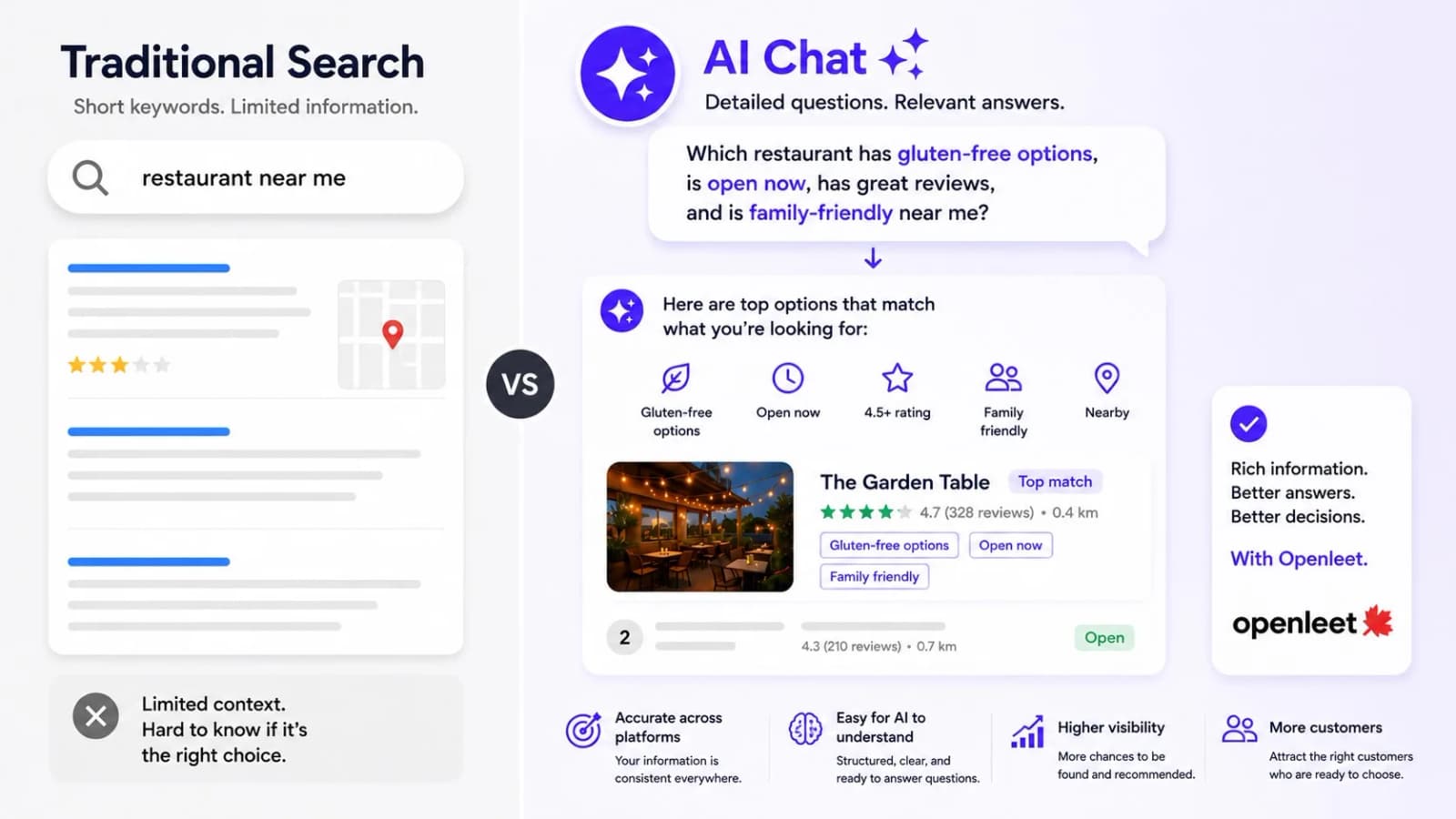
Today, many people don't start by visiting a homepage. They ask AI assistants questions like:
Which daycare near me has infant care, outdoor play, flexible hours, and good reviews?
or
Find an accountant that specializes in small businesses and offers online meetings.
The AI doesn't browse websites the way people do. It tries to understand facts, compare businesses, and answer questions directly.
That shift changes what businesses need to publish online.
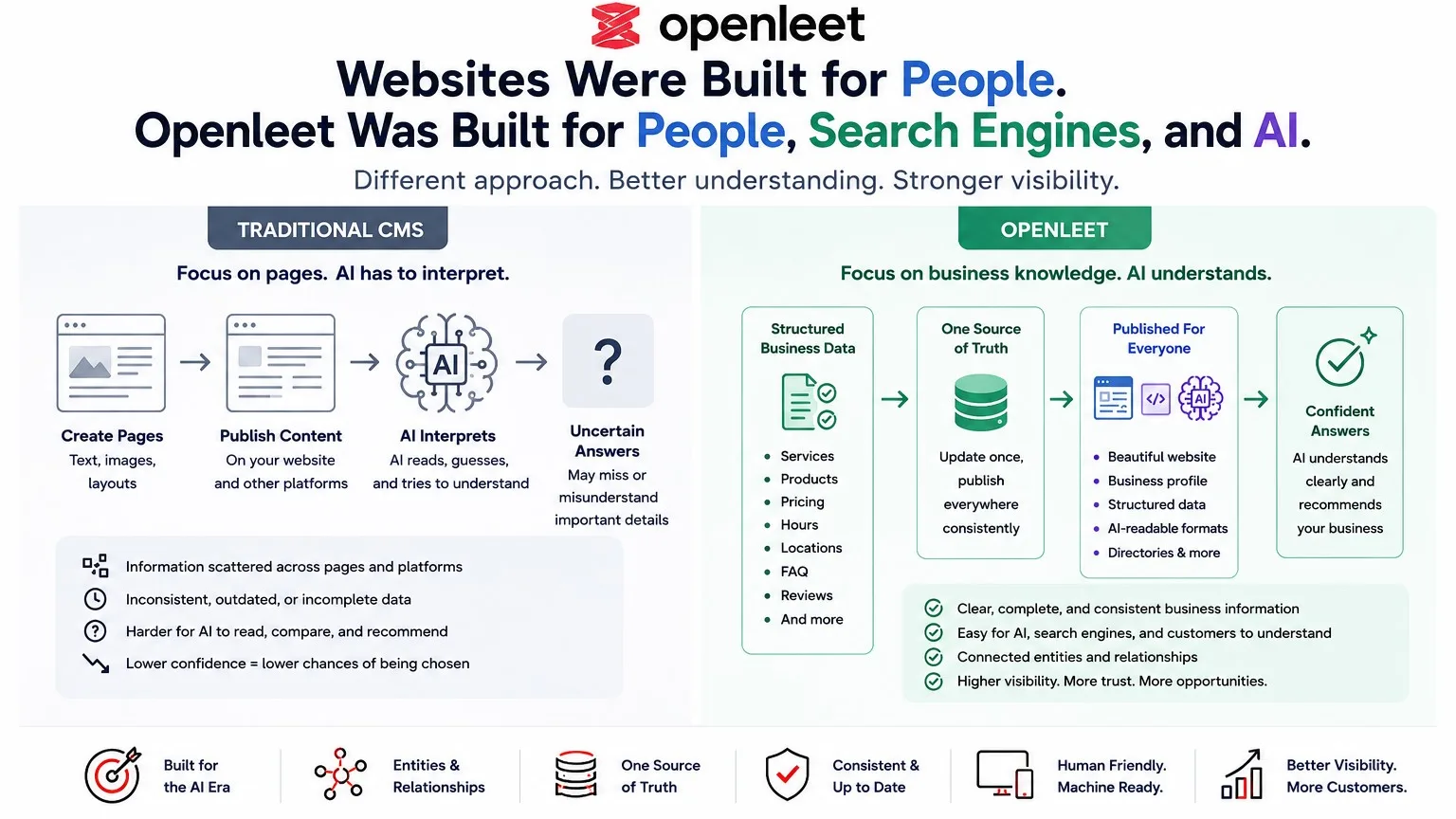
Traditional Content Management Systems Were Built for Pages
Most website builders and content management systems are excellent at creating beautiful websites.
They help businesses build:
Homepages
About pages
Service pages
Blog posts
Image galleries
Contact pages
These systems focus on presentation.
Their goal is to create websites that people enjoy reading.
And they do that very well.
But AI has a different challenge.
It must understand the business behind those pages.
AI Doesn't Read Like a Human
A visitor instantly understands this sentence:
"We provide bookkeeping services for small businesses in Squamish."
An AI assistant has to determine:
Is bookkeeping the primary service?
Is it available only in Squamish?
Is it available remotely?
Is it for corporations?
Is pricing available?
Is this service still active?
Is this the current information?
It often has to infer those answers from paragraphs of text.
Sometimes it succeeds.
Sometimes it doesn't.
Guessing Creates Uncertainty
Many businesses unknowingly publish information that is easy for people to understand but difficult for machines to interpret.
For example:
A service is described differently on the website than on a directory.
Business hours are updated on Google but not on the website.
Pricing exists inside a PDF.
Products appear only in images.
Important details are scattered across multiple platforms.
Humans can usually work through those inconsistencies.
AI systems become less confident.
And when confidence drops, recommendations become less likely.
Openleet Starts With Business Knowledge
Openleet takes a different approach.
Instead of starting with webpages, it starts with business information.
Every piece of information is treated as structured knowledge.
For example, a service isn't just a paragraph on a webpage.
It becomes a complete business entity with information such as:
Service name
Description
Category
Availability
Pricing
Service area
Frequently asked questions
Images
Related products
Related articles
Structured data
The same applies to:
Products
Menu items
Events
Articles
Locations
Contact methods
Business hours
Reviews
This creates a structured understanding of the business before a webpage is even generated.
One Source of Truth
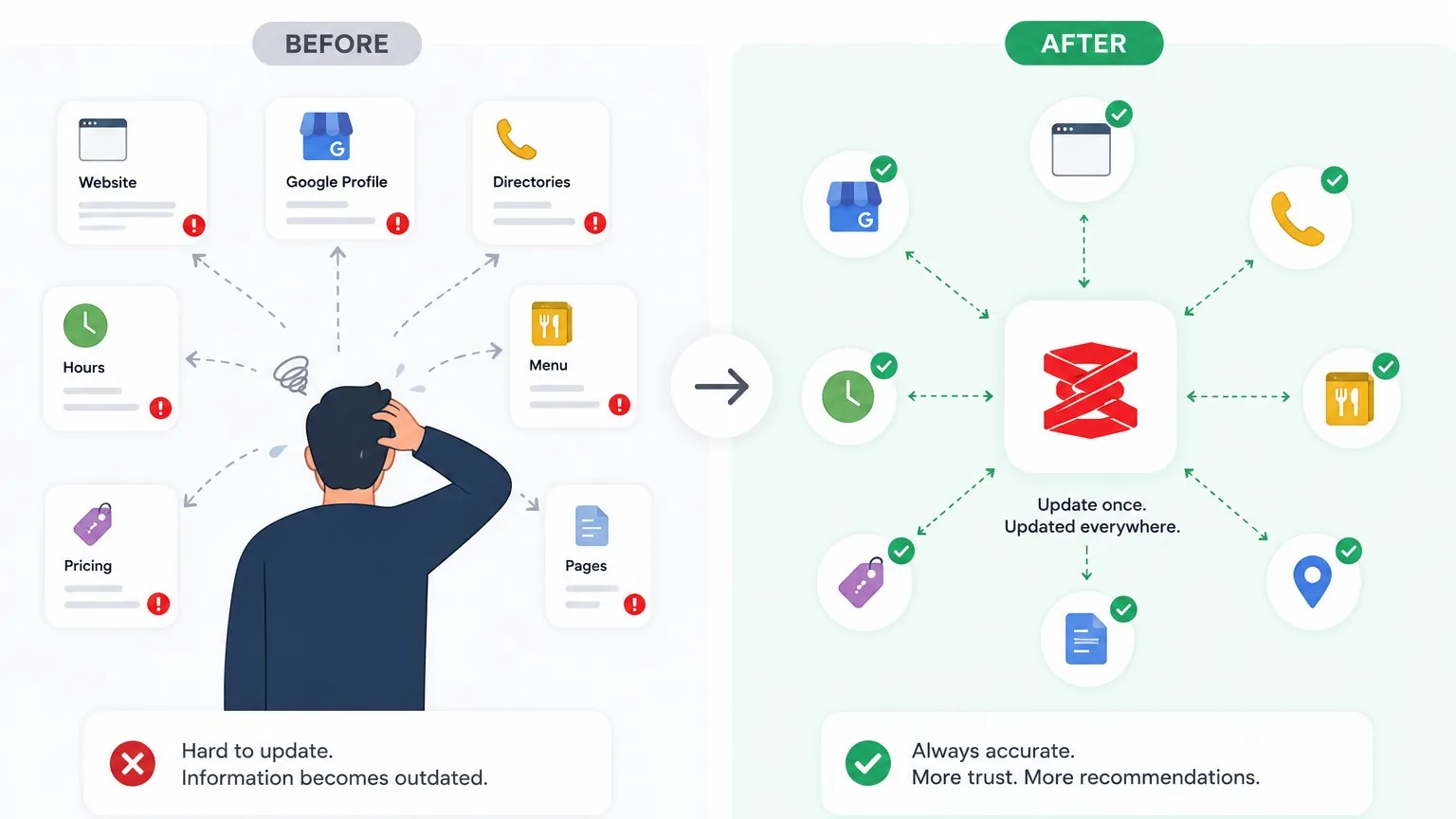
One of the biggest challenges for businesses is keeping information consistent.
The same information often exists in multiple places:
Website
Google Business Profile
Social media
Directories
PDFs
Menus
Brochures
Eventually, something becomes outdated.
Openleet is designed around a single source of truth.
Business information is entered once, organized in one place, and then published consistently across the business profile, website, structured data, and other machine-readable formats.
When information changes, it can be updated from one central source.
Built for Humans and Machines
Openleet does not replace a beautiful website.
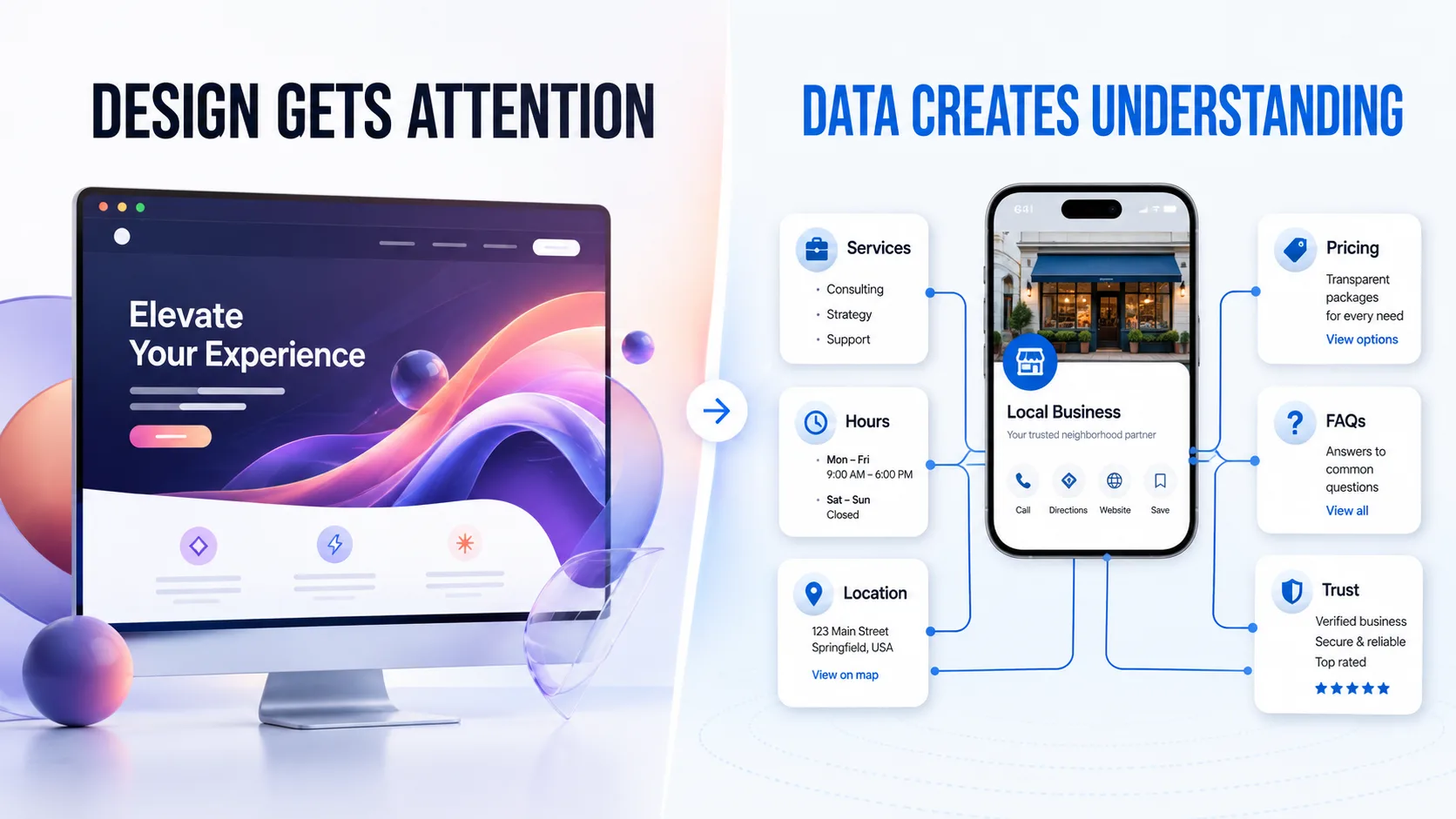
Instead, it generates information in forms that different audiences can understand.
For people:
Clean webpages
Images
Articles
Menus
Service pages
Contact information
For search engines:
Structured data
Entity relationships
Business metadata
Semantic organization
For AI assistants:
Clearly defined facts
Relationships between business information
Consistent business entities
Machine-readable business knowledge
Instead of asking AI to interpret everything, Openleet explains the business in a language machines understand.
Relationships Matter
Businesses are not collections of unrelated pages.
Everything is connected.
A service belongs to a business.
A location offers specific services.
A menu item belongs to a menu.
An article explains a service.
A product has pricing, availability, and frequently asked questions.
Openleet preserves these relationships.
That helps search engines and AI understand not only individual pieces of information, but how they fit together.
Beyond Content Management
Traditional content management systems organize webpages.
Openleet organizes business knowledge.
That difference may sound subtle, but it changes how information is created, maintained, and discovered.
Instead of asking:
"Which page should I add this information to?"
Openleet asks:
"What fact about your business should customers, search engines, and AI know?"
That information can then be published wherever it is needed.
Designed for the Next Generation of Search
Search is changing.
Customers increasingly expect direct answers instead of lists of links.
AI assistants are becoming another way people discover businesses.
Businesses that publish clear, complete, and structured information are easier to understand and easier to recommend.
This isn't about replacing websites.
It's about making websites part of a broader, connected knowledge system.
The Openleet Difference
Openleet was built around a simple idea:
Business information should only need to be organized once.
From that single source of truth, Openleet helps businesses create:
A professional business profile
A modern website
Structured data for search engines
AI-readable business information
Connected products, services, articles, menus, events, and locations
The result is an online presence that works for today's customers while preparing businesses for how discovery is evolving.
Because the future of the web isn't just about creating more pages.
It's about making business information easier for people, search engines, and AI to understand, trust, and recommend.