Local businesses don’t compete on size.
They compete on clarity.
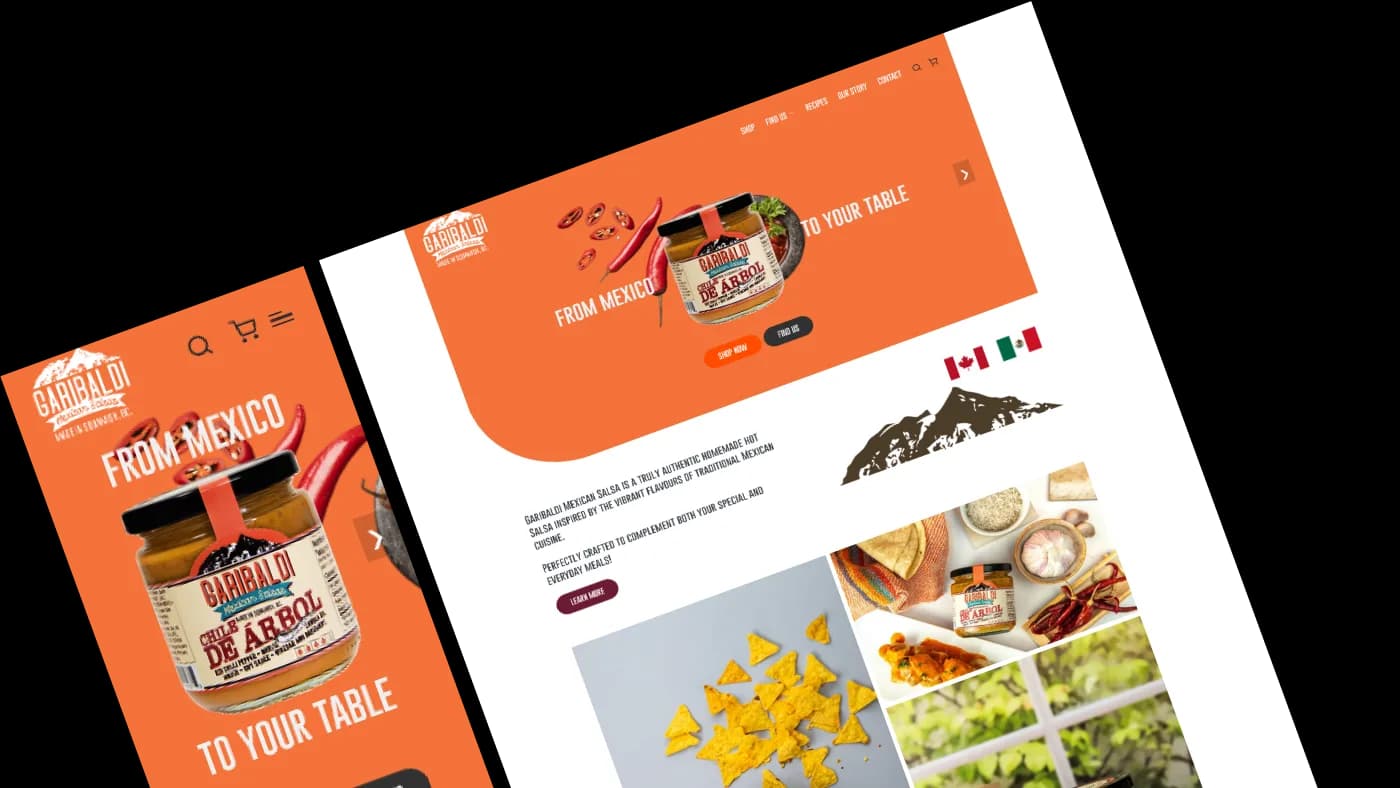
Garibaldi Foods is a locally rooted grocery retailer serving its community with curated products and specialty food items.
But like many independent retailers, the digital presence didn’t fully reflect the strength of the in-store experience.
This case study explains how strategic structure — not just design — transformed the website into a true business asset.
The Challenge
Before optimization, the digital presence faced common small-business issues:
Limited product structuring
Minimal search intent coverage
Weak service modeling
No strategic FAQ layer
Underdeveloped location clarity
Navigation that reflected pages — not business logic
The website existed.
But it functioned more like a brochure than a structured digital asset.
The Strategic Goal
The objective was not “make it look nicer.”
The objective was:
Clarify positioning
Structure product categories logically
Improve local discoverability
Model offerings in a way search engines understand
Improve user navigation flow
Build long-term digital equity
In short: turn information into structured value.
Step 1: Clarifying the Positioning
Instead of vague descriptions, the messaging focused on:
Local identity
Specialty product focus
Community-based retail value
Freshness & quality differentiation
Clear positioning strengthens both:
User understanding
Search engine interpretation
Step 2: Product & Category Structuring
Retail websites often list products in unorganized grids.
Instead, the structure emphasized:
Logical category grouping
Clear labeling
Intent-based organization
Improved product navigation
This reduces friction for customers and improves crawl clarity for search engines.
Structure improves usability.
Usability improves engagement.
Step 3: Location & Local Signals
For local retailers, location clarity is critical.
Improvements included:
Clear geographic references
Local community positioning
Reinforced physical presence
Local relevance in messaging
Generic geography weakens authority.
Specificity builds trust.
Step 4: Conversion Path Optimization
The website was adjusted to guide visitors toward action:
Clear contact access
Simplified navigation
Reduced cognitive load
Improved mobile experience
A business website must support action — not just information.
Step 5: Structured Thinking Over Pure Design
One of the biggest improvements was invisible to most users:
Structural logic.
Rather than focusing only on visuals, the emphasis was on:
Clear hierarchy
Service modeling logic
Scannable information blocks
Future-ready structure
This foundation allows long-term scalability.
The Outcome
While exact metrics are private, the structural improvements achieved:
Clearer brand identity
Improved product organization
Stronger local positioning
Better mobile usability
Stronger foundation for discoverability
Most importantly:
The website now functions as a business support system — not just a display.
The Broader Lesson for Local Businesses
Garibaldi Foods is not unique.
Most small businesses face the same digital gap:
They have a website.
But they don’t have structure.
In 2026, structure determines:
Search clarity
AI visibility
Conversion performance
Long-term digital value
A beautiful site without structure underperforms.
A structured site compounds value over time.
When Does Professional Structure Matter?
Professional optimization becomes valuable when:
Your products are diverse
Your services need modeling
Your competition is strong
You want long-term scalability
You don’t have time to architect the system properly
ABR Websites focuses on this structural layer — especially for businesses building on modern structured platforms like Openleet.
Final Insight
A website should not just reflect your business.
It should support it.
Garibaldi Foods demonstrates how small strategic adjustments — rooted in structure and clarity — can transform a digital presence from brochure to asset.
The difference isn’t design.
It’s architecture.