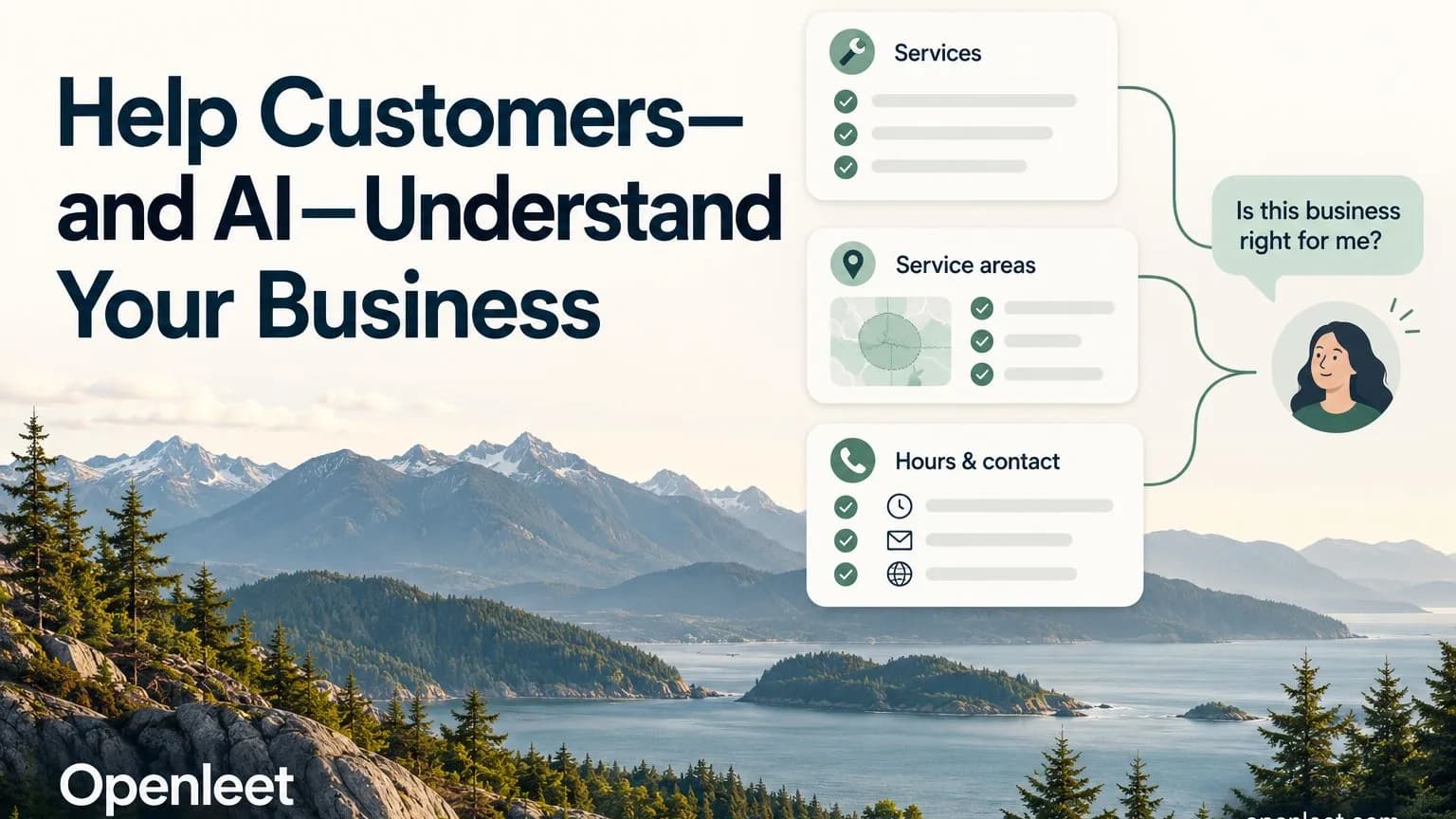
Help Customers—and AI—Understand Your Business
You know what your business offers. But does your online presence explain it clearly enough for someone who has never heard of you?
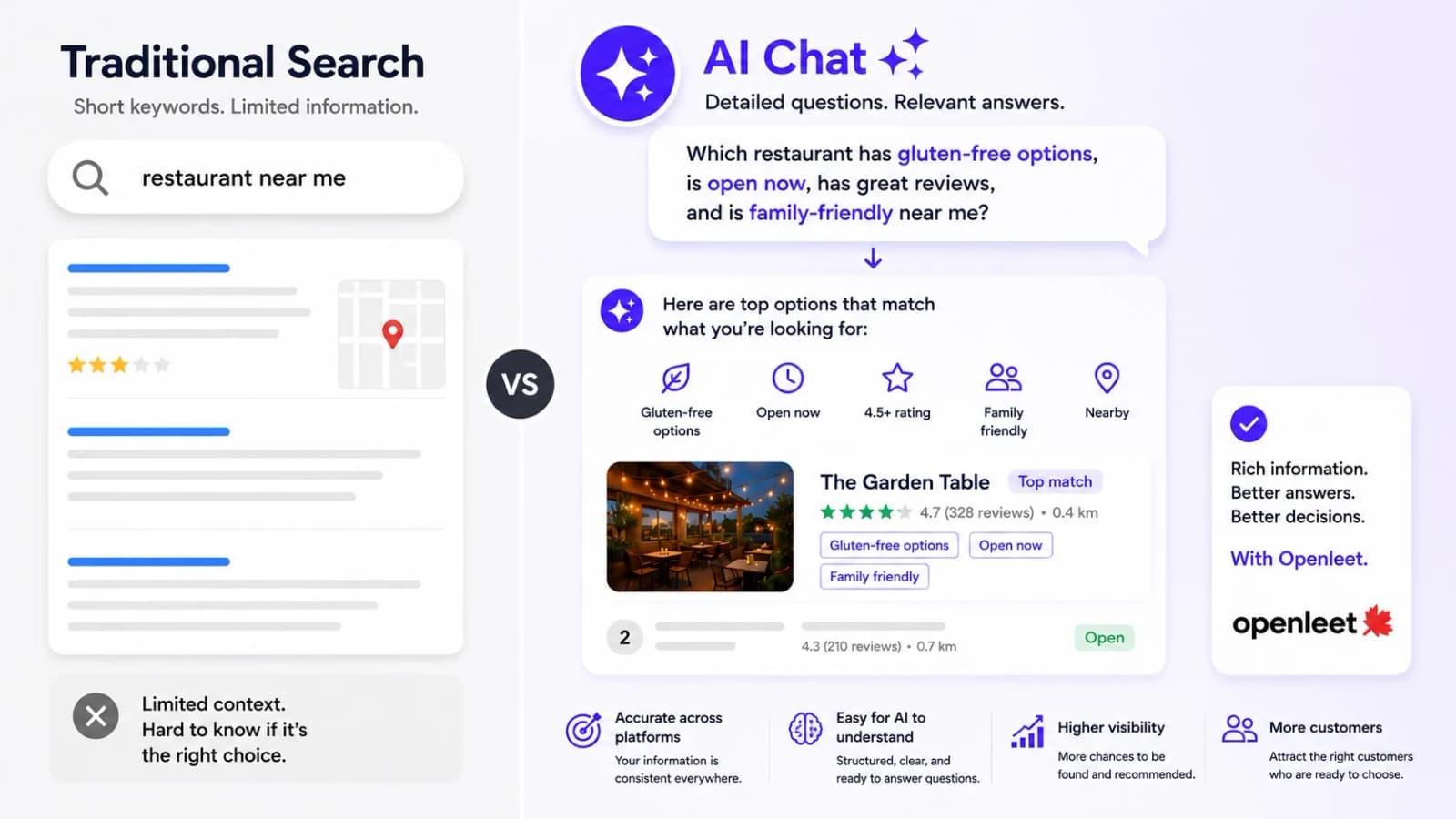
Imagine a customer asking an AI assistant:
“Who offers move-out cleaning in Squamish, brings their own supplies, and works weekends?”
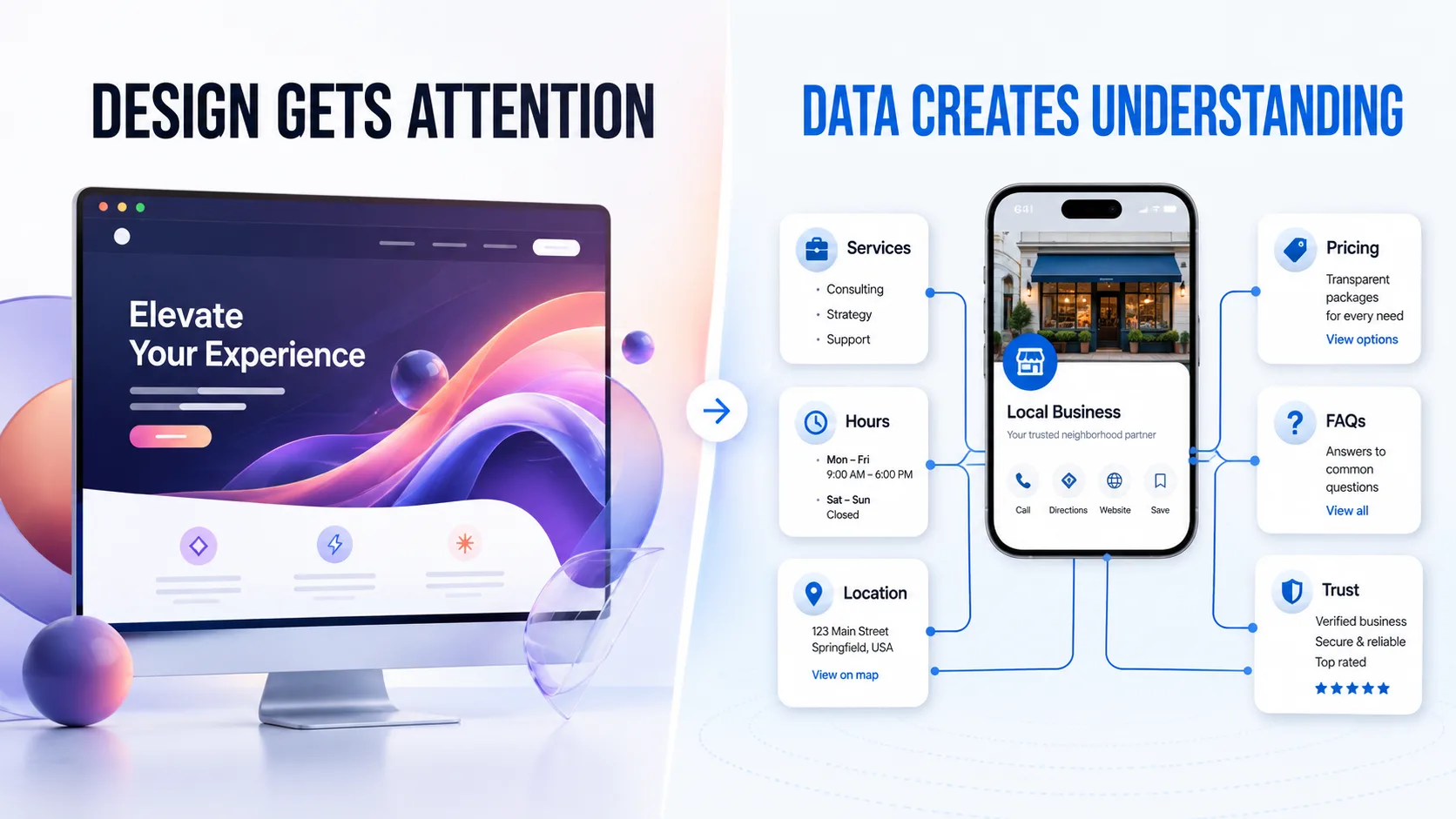
A website that says “professional cleaning services” answers only part of that question. It identifies the type of business, but leaves the customer’s specific needs unanswered.
Clear, detailed, and current business information helps close that gap.
Specific questions need specific information
Customers want to know whether you can help with their particular situation.
A homeowner might need a painter who handles exterior wood siding. A parent might want childcare for a particular age group. A small business owner might need an accountant who offers both bookkeeping and payroll.
Your business may provide exactly what they need. But if those details are missing online, visitors have to contact you to find out—or continue looking elsewhere.
AI-assisted search adds another reason to publish useful answers. Google explains that its AI search features can handle nuanced questions and complex comparisons. Its guidance still emphasizes familiar foundations: helpful content, accessible text, and accurate business information.
The practical lesson is straightforward: explain what you actually do in terms your customers understand.
Useful detail matters more than extra words
Making your information more complete doesn’t mean filling your website with long descriptions or repeating keywords.
Compare these two fictional examples:
General description:
“We provide reliable cleaning services with excellent customer care.”
Specific description:
“We provide move-out cleaning for apartments and houses in Squamish. Cleaning supplies are included. Weekend appointments are available by arrangement. Contact us with your property size and preferred date for a quote.”
The second description answers several practical questions. It helps a visitor decide whether to take the next step.
Only publish details that are true for your business. If availability changes frequently, explain how customers can confirm it.
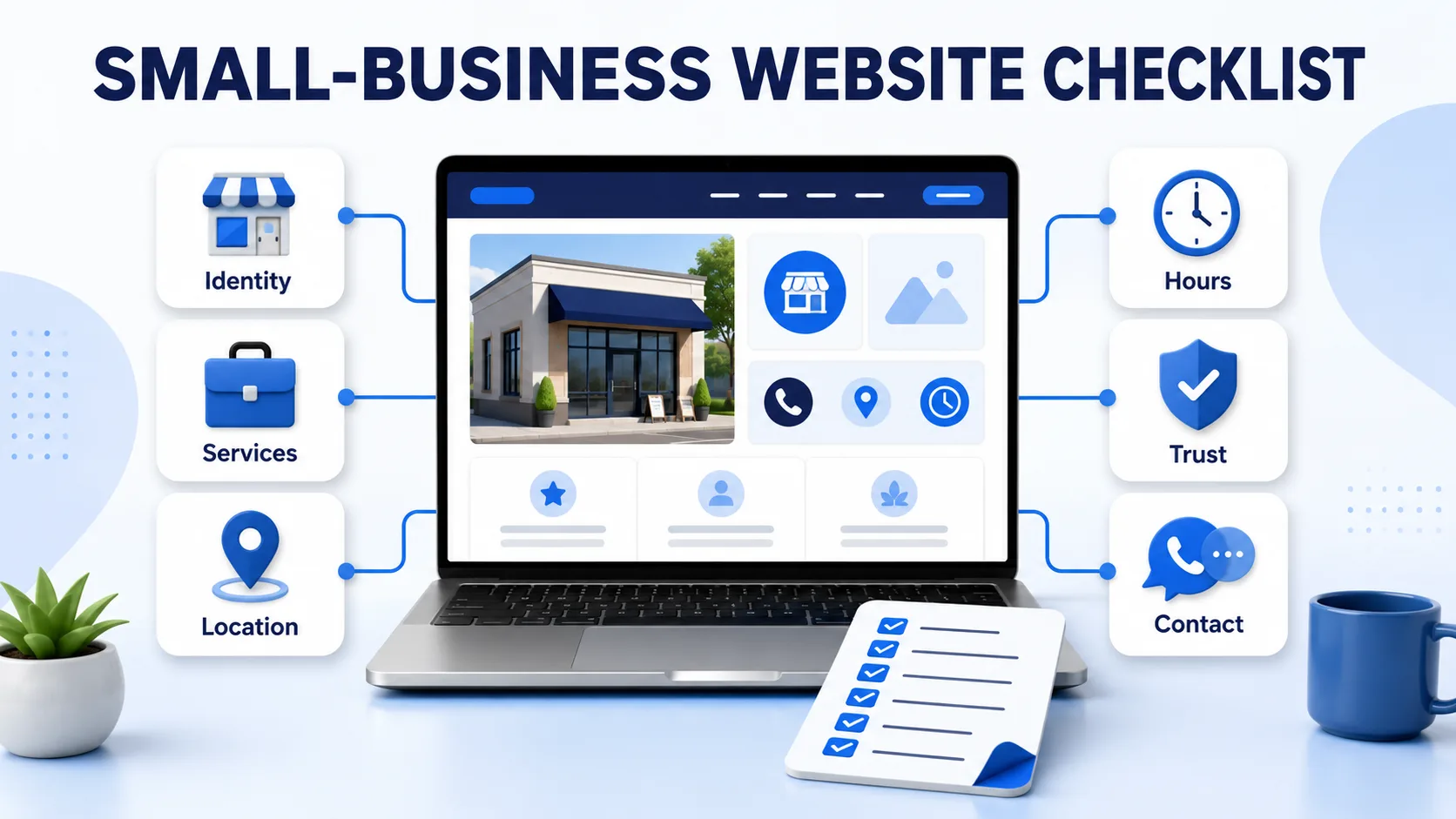
Six areas worth checking
1. Your services and what’s included
Name your services individually and explain their scope.
“Landscaping” might include lawn maintenance, garden cleanup, planting, or retaining walls. Customers shouldn’t have to guess which of these you provide.
Mention important exclusions where they help prevent misunderstandings.
2. Your location and service areas
Explain where customers can visit you and where you travel to provide services.
A North Vancouver address doesn’t automatically tell someone whether you also serve West Vancouver. If you offer remote services throughout BC, make that distinction clear.
3. Your hours and availability
Keep regular hours accurate and publish relevant changes.
Distinguish opening hours from appointment availability. Being open on Saturday doesn’t necessarily mean a customer can book a Saturday appointment.
4. Pricing and the quote process
Publish prices when they are appropriate and reasonably stable.
For work that needs an individual estimate, explain what affects the price and what information customers should provide. You can make the process clear without promising a fixed price.
5. Evidence that helps customers assess your business
Use relevant project photos, genuine testimonials, and accurate qualifications or credentials.
Explain what the evidence shows. A photo with a useful description can tell a customer more than a gallery with no context.
6. A clear next step
Make it easy to call, send an inquiry, request a quote, or book.
Test those options on your phone. Check that links work and that messages reach the right person.
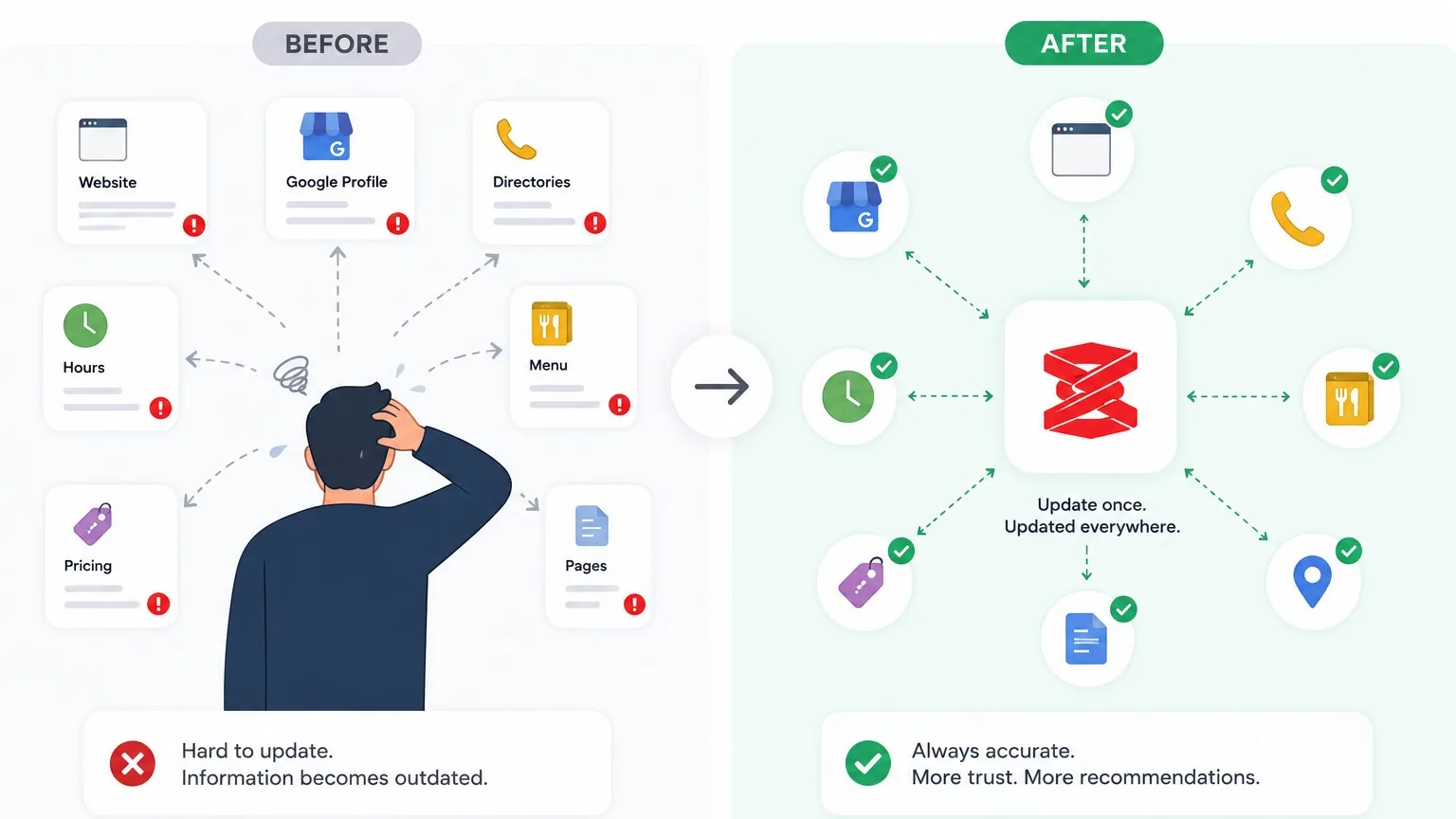
Keep your information current as your business changes
A website can look professional while describing an earlier version of your business.
You may have introduced a service, changed your hours, expanded your service area, or stopped offering something. Those changes should be reflected wherever customers find you.
Set a regular reminder to review essential information, and update it whenever a meaningful change happens. Check your website, business profiles, and social accounts for conflicting details.
The goal is accuracy. Changing dates or rewriting paragraphs without adding useful information is not a substitute.
What clear information can—and cannot—do
Accurate information gives customers and discovery tools better facts to work with. It does not guarantee search rankings, AI recommendations, or customer inquiries.
Google states that no special AI markup or new AI text files are required for its AI search features. Established SEO practices remain relevant, and structured data should match the information visitors can see.
Different discovery systems work differently. Clear content is a useful foundation, alongside technical accessibility and the other factors those systems consider.
How Openleet helps
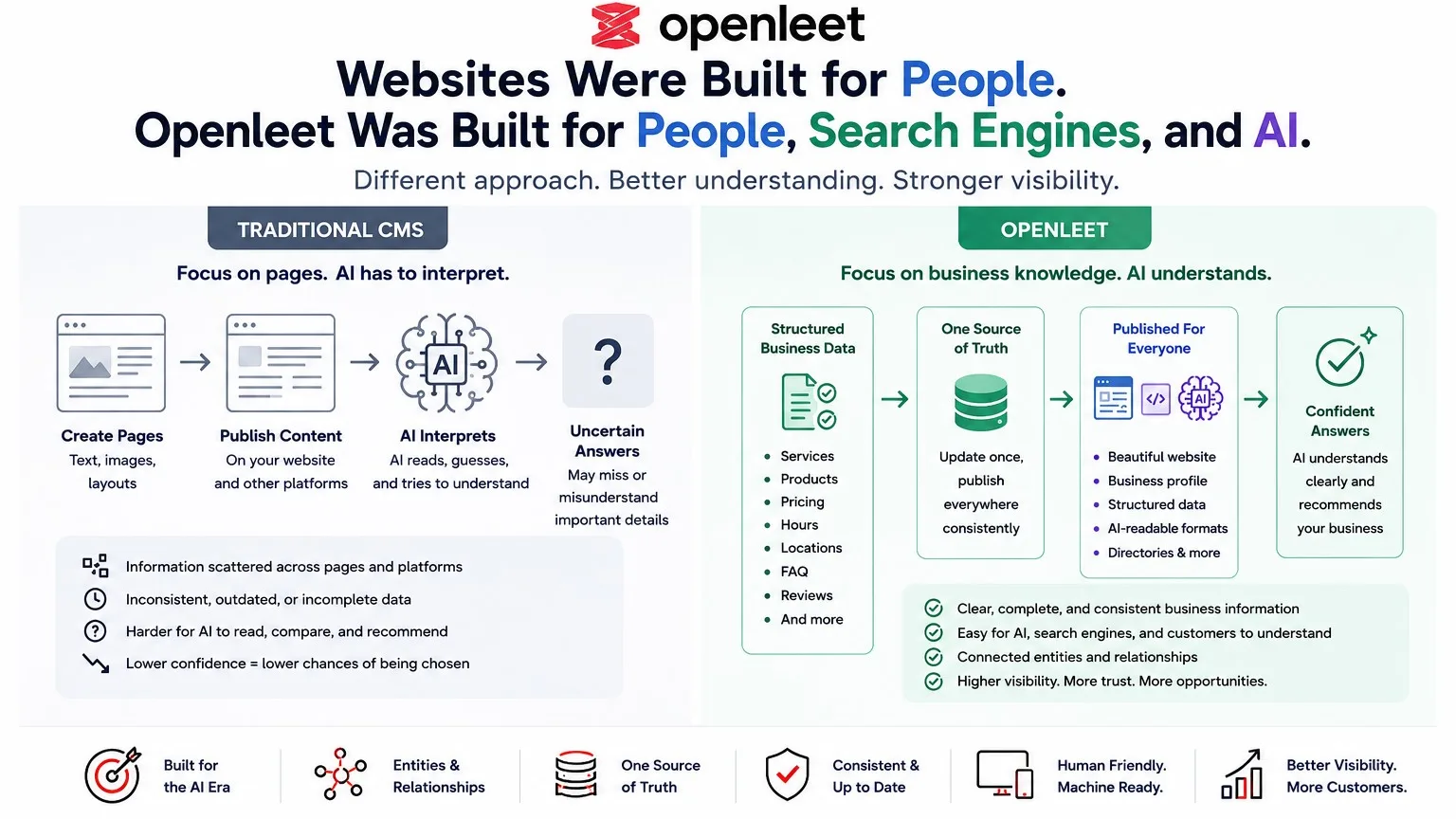
Openleet starts with your business information.
You can organize your details in one dashboard and use them to maintain your public business profile, directory presence, and optional website.
The aim is to make it easier to explain your business clearly and keep that information current as your work changes.
Built in Squamish, British Columbia, Openleet offers a free business profile to get started.
Try this today: ask someone unfamiliar with your business to look at your online presence. Can they tell what you offer, where you work, and how to contact you?
Their unanswered questions are a useful place to start.