Website Design or Business Data: What Matters More?
A successful business website needs both good design and useful information—but they do different jobs. Design creates an impression and makes information pleasant to use. Business data helps customers, search engines and AI assistants understand what the business offers, where it operates and why someone should choose it. As online discovery becomes more conversational and increasingly happens without a website visit, accurate and well-organized business information is becoming more important than ever.
The beautiful-website question
When some business owners plan a new website, their first questions concern its appearance:
Will it look modern?
Can it include animations and motion effects?
Can we use a large video across the homepage?
Can every section have a distinctive design?
Will it look more impressive than competitors’ websites?
These are reasonable questions. A website represents the business, and an outdated or confusing design can create the wrong impression.
But another question must come first:
After seeing the website—or asking an AI assistant about the company—will someone clearly understand the business?
A website can look exceptional and still leave important questions unanswered. It may not clearly explain its services, prices, service area, availability, qualifications, policies or what makes the business different.
The result is a beautiful website that communicates surprisingly little.
Some businesses genuinely need design to lead
Visual presentation is especially important when the business itself sells visual talent, entertainment or creative expertise.
For example:
Architects need to showcase their buildings and design approach.
Artists and illustrators need a strong visual portfolio.
Photographers need images that demonstrate their abilities.
Interior designers need to present spaces and transformations.
Film studios need video and motion to communicate their production quality.
Graphic designers need their own websites to demonstrate visual judgment.
Fashion and luxury brands often use design to establish a particular feeling.
For these businesses, the website is not merely a container for information. It is part of the portfolio and evidence of the company’s abilities.
Even then, presentation cannot completely replace information. A visually impressive architecture website still needs to describe project types, locations, expertise, processes and how clients can start a conversation.
The appropriate balance depends on what customers need to see before making a decision.
Most local businesses have a different priority
A childcare centre, restaurant, contractor, accountant, repair company or cleaning service has a different challenge.
Its prospective customers are usually trying to answer practical questions:
What exactly does this business offer?
Does it serve my location?
Is it open when I need it?
How much might the service cost?
Is it qualified, licensed or insured?
Does it have experience with my particular problem?
What do previous customers say?
How can I make an appointment?
What should I expect after contacting the business?
For these companies, being understood, found and trusted usually matters more than sophisticated visual effects.
A contractor does not necessarily need an elaborate animated homepage. The contractor needs customers to understand the types of projects accepted, areas served, relevant licences, previous work and how to request an estimate.
A childcare provider needs to publish age groups, hours, availability, enrolment procedures, qualifications, safety measures and program details.
A restaurant needs an accessible menu, prices, hours, address, dietary information, reservation options and clear photographs.
Design should make this information easier to find and understand. It should not become a substitute for the information.
Customers increasingly receive answers without visiting websites
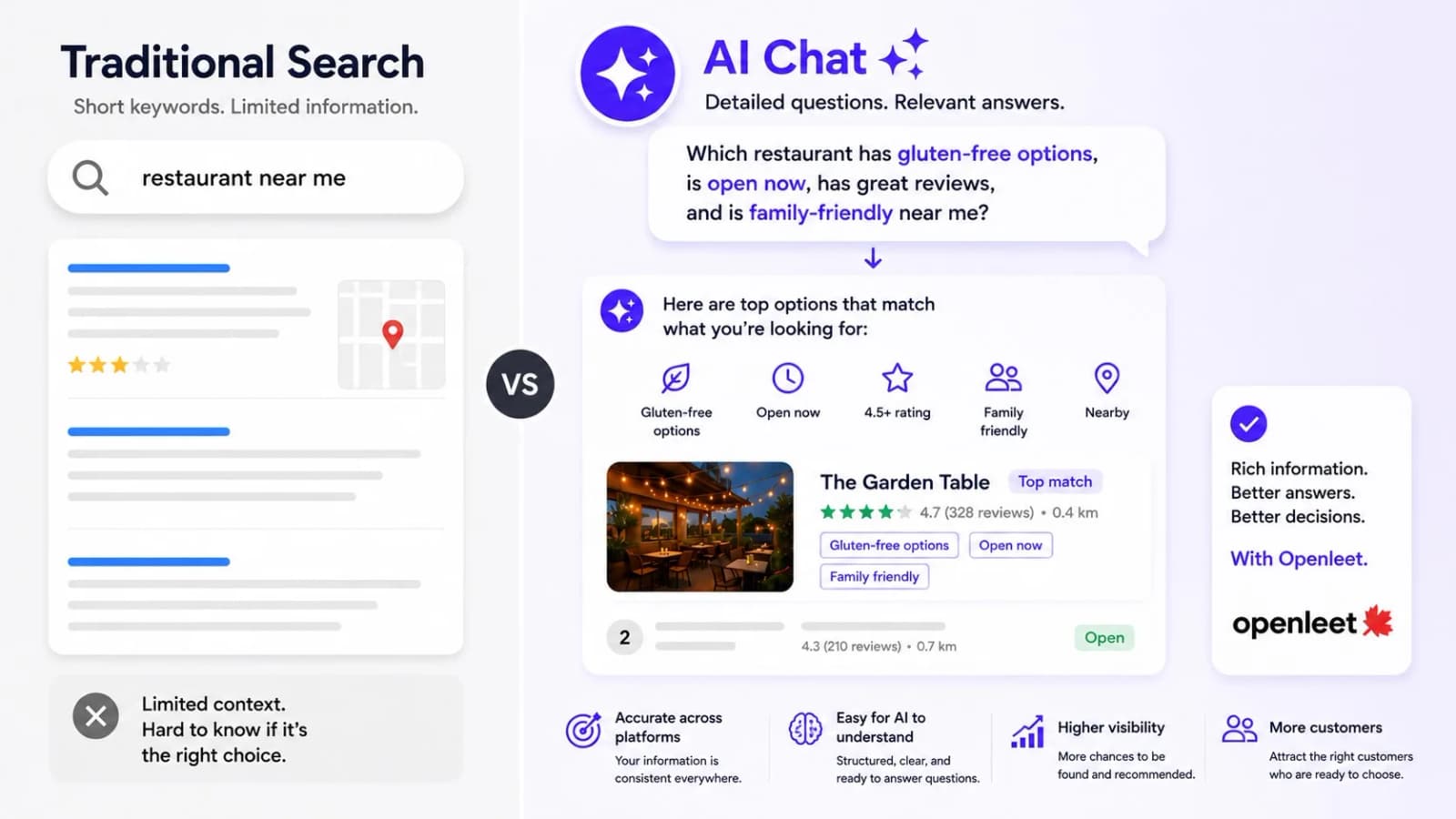
The traditional search journey was relatively simple:
A customer searched for something.
The search engine displayed a list of links.
The customer visited several websites.
The customer compared the businesses.
The customer made a decision.
That journey is changing.
Customers can now ask ChatGPT, Gemini, Claude, Perplexity and AI-powered search engines complete questions. Instead of receiving only a list of links, they may receive a summarized answer, a comparison or a short list of suggested options.
Google’s AI Overviews are also placing generated answers directly above conventional search results. This means that a person can learn about a subject—or sometimes compare available options—without visiting the original websites.
A 2025 Pew Research Center study examined 68,879 Google searches made by 900 U.S. adults. It found that:
Users clicked a conventional search result in 8% of visits when an AI summary appeared.
Without an AI summary, they clicked a search result in 15% of visits.
A source cited inside the AI summary received a click in only 1% of visits.
Browsing ended after 26% of searches with an AI summary, compared with 16% without one.
The study does not prove that websites are becoming unnecessary. It shows that websites can influence a customer’s discovery and decision without necessarily receiving a visit.
A separate SparkToro and Datos zero-click study estimated that only 360 of every 1,000 U.S. Google searches resulted in a visit to the open web. The European figure was 374 per 1,000 searches.
These findings point toward a significant change:
Your website is no longer communicating only with the people who open it. Its information may also be processed by search engines, crawlers and AI systems that help people make decisions elsewhere.
AI cannot be impressed by animation
A customer may appreciate an attractive animation, carefully selected typography or an elegant transition between sections. These features can strengthen the experience and reinforce the brand.
But a crawler or AI system is primarily trying to identify information and relationships:
What is the business called?
What type of business is it?
What services or products does it offer?
Where does it operate?
What are its hours?
Who are its services intended for?
What qualifications and trust signals are available?
What prices, policies or availability information has it published?
How recently was the information updated?
Do different pages provide consistent details?
A motion effect cannot answer these questions. A background video cannot replace an accurate service description. A beautiful photograph does not communicate opening hours unless that information is also provided in accessible text and, where appropriate, structured data.
This does not make design irrelevant. It changes the job design must perform.
Good design should help people reach the information. It should not hide the information beneath effects, vague slogans or unnecessary interactions.
Mobile screens have simplified website design
The claim that 86% of website traffic comes from smartphones is not supported by reliable global traffic measurements. The exact proportion varies significantly by industry, country and measurement method.
Nevertheless, mobile devices represent the largest or one of the largest sources of web traffic. Similarweb estimated that mobile accounted for approximately 65% of worldwide web traffic in June 2026, while Statcounter measured mobile at approximately 52% for the same month. The difference shows why statistics should always be presented with their source and methodology. Similarweb platform statistics, Statcounter platform statistics
On a narrow mobile screen, much of the visual complexity designed for a desktop must be rearranged or simplified. Multiple columns become one column. Large navigation menus collapse. Some animations are reduced. Text, images, videos and buttons are generally stacked vertically.
This does not mean that designers cannot create excellent mobile experiences. Skilled designers can do a great deal with spacing, typography, colour, imagery, hierarchy and interaction.
It does mean that clarity becomes more important than decoration.
Mobile visitors usually need to quickly understand:
Where they are
What the business provides
Whether it is relevant to them
Whether they can trust it
What they should do next
Google also uses mobile-first indexing and recommends responsive design, reinforcing the importance of making the same essential information accessible on mobile devices. Google’s mobile-first indexing guidance
Design and data are not opponents
It is tempting to make the argument simple:
Data is important, so design is unimportant.
That would be a mistake.
Poor design can make excellent information difficult to read. Confusing navigation can prevent customers from finding services. Weak typography can reduce accessibility. Slow, excessive animation can frustrate visitors. An unprofessional visual presentation can reduce trust.
Design and data should therefore work together:
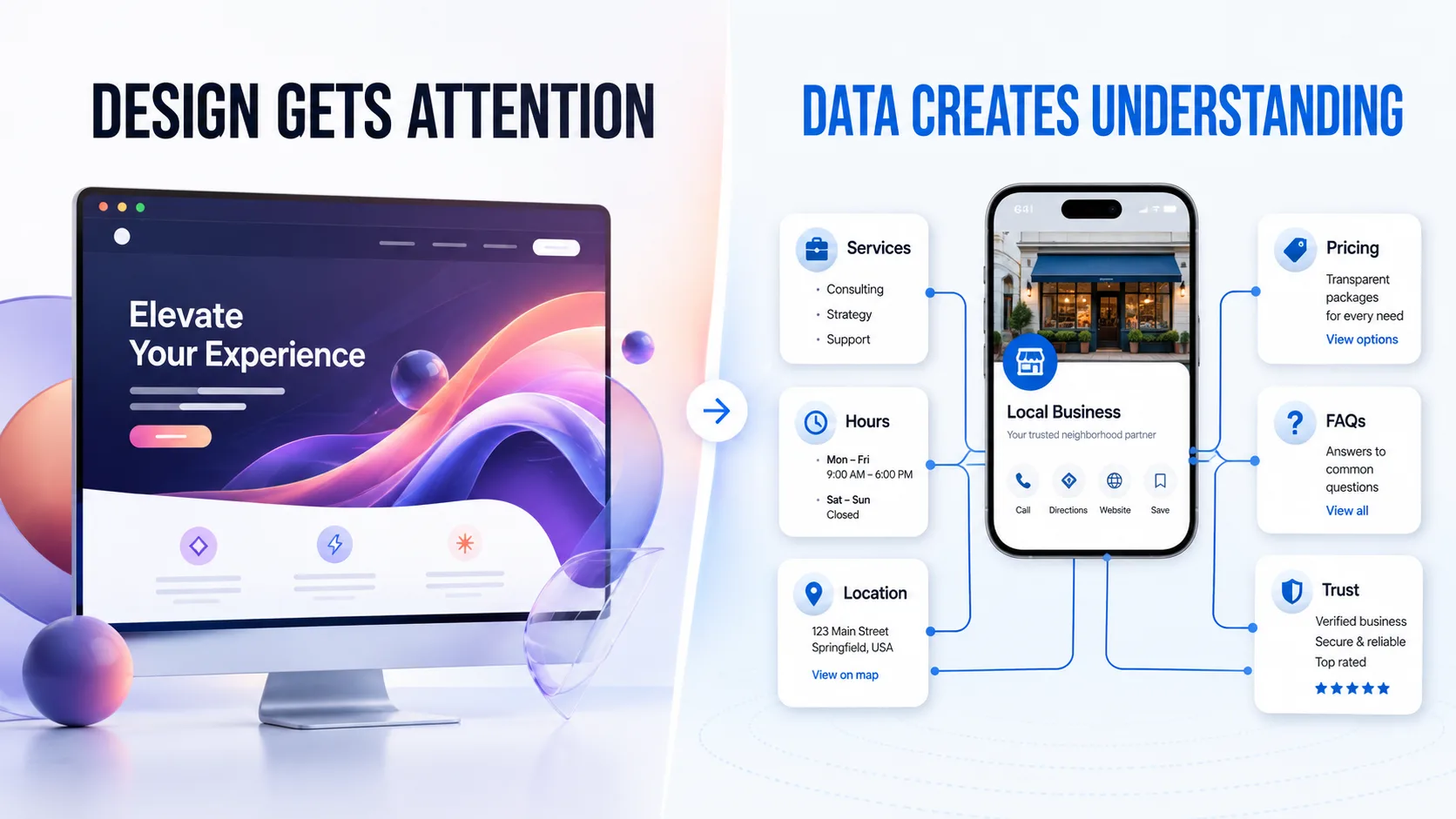
Business data providesDesign providesClear factsClear presentationServices and product detailsVisual hierarchyHours and locationsEasy navigationPrices and availabilityReadabilityQualifications and policiesProfessional impressionCustomer questions and answersUsable interactionMachine-readable meaningHuman-friendly experienceInformation for discoverySupport for conversion
Design helps people experience the business. Data helps people and machines understand it.
For most small businesses, the correct order is:
Determine what customers need to know.
Organize and publish that information.
Make it accessible to search engines and AI systems.
Design a clear, attractive experience around it.
Keep the information accurate over time.
The DIY website trend reflects a practical need
Many small-business owners do not want to hire a designer every time they change a price, add a service, update their hours or publish a new project.
This is one reason do-it-yourself website services have become popular. Business owners want greater control, lower ongoing costs and the ability to make changes quickly.
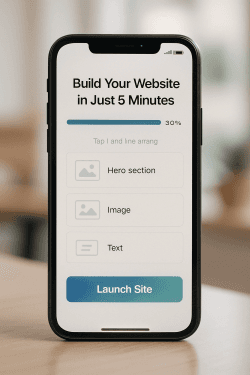
But many DIY builders still begin with a visual template. They ask the owner to choose colours, fonts and layouts before helping them determine which business facts customers actually need.
The result may be a polished website containing generic text, incomplete service information and details that are difficult to maintain.
For a business that primarily needs to be discovered and understood, the process should begin with information—not a template.
What an information-first business presence requires
A useful business presence should allow an owner to manage more than a homepage introduction. It should organize the company as a collection of connected entities.
These may include:
Business identity and description
Categories and specialties
Locations and service areas
Hours and special hours
Contact methods
Individual services
Products and offers
Pricing and availability
Frequently asked questions
Policies
Qualifications and certifications
Testimonials and reviews
Articles, projects and case studies
Photographs, videos and galleries
Each item should have its own meaning and relationship to the rest of the business.
For example, a service should not exist only as a sentence inside a large text block. It can have its own name, description, price, audience, availability, location, images, questions and supporting evidence.
This makes the information more useful to customers and easier for digital systems to interpret.
Structured data helps communicate meaning
Web pages are primarily designed for people, but structured data gives search engines an additional machine-readable description of what the page represents.
Google explains that structured data provides explicit clues about a page’s meaning. Depending on the content, it can describe a local business, product, event, article, review, offer or frequently asked question. Google’s introduction to structured data
For a local business, structured data may communicate information such as:
Business type
Name and address
Opening hours
Telephone number
Location
Services
Products and offers
Ratings and reviews
Structured data does not guarantee a higher ranking, enhanced search result, AI citation or recommendation. It helps systems identify information more clearly and reduces ambiguity.
The quality of the underlying information still matters. Adding structured markup to inaccurate or incomplete information does not solve the real problem.
Why we created Openleet
We created Openleet around a simple principle:
Small businesses need an easy way to introduce themselves clearly to customers, search engines, crawlers and AI systems.
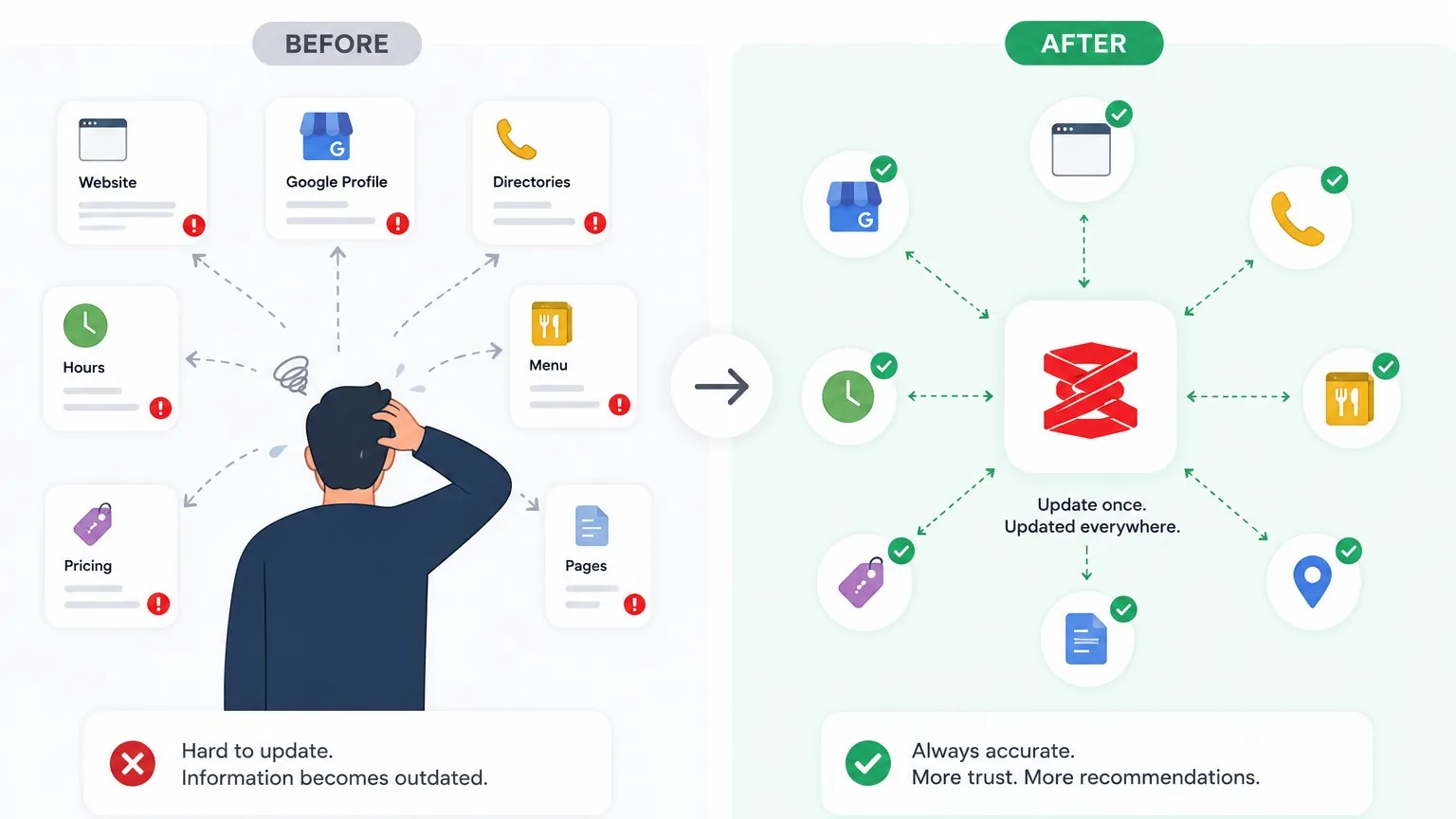
Openleet provides tools for business owners to organize, control and update their business information without rebuilding pages or relying on a designer for routine changes.
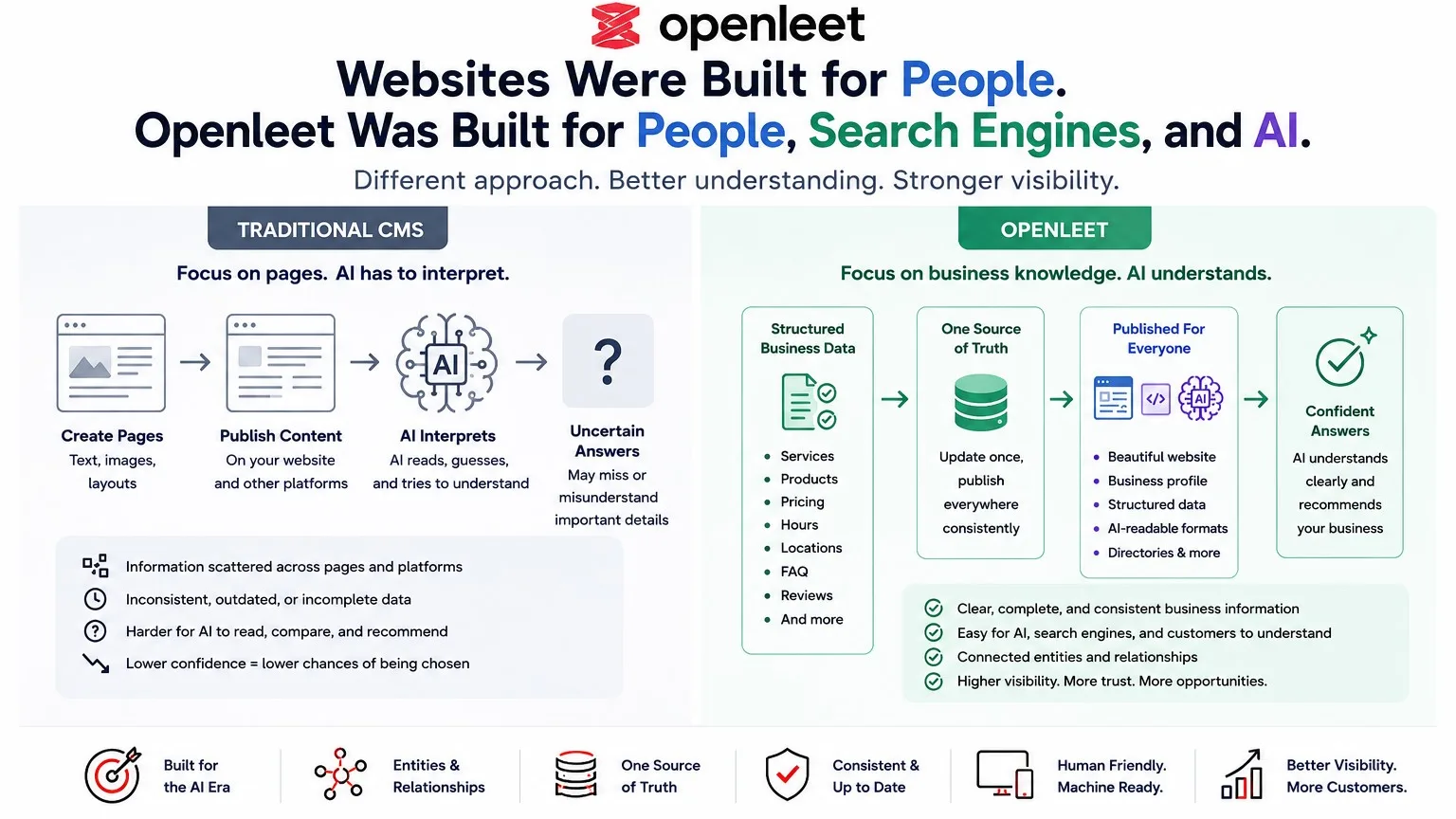
Instead of treating the business as a collection of disconnected text blocks, Openleet organizes its information as connected entities—an approach we describe as an Information Knot.
The business identity connects with its locations. Locations connect with hours and service areas. Services connect with prices, availability, images and frequently asked questions. Testimonials, articles, products and trust information add further context.
Openleet can then present this information in different forms for different audiences:
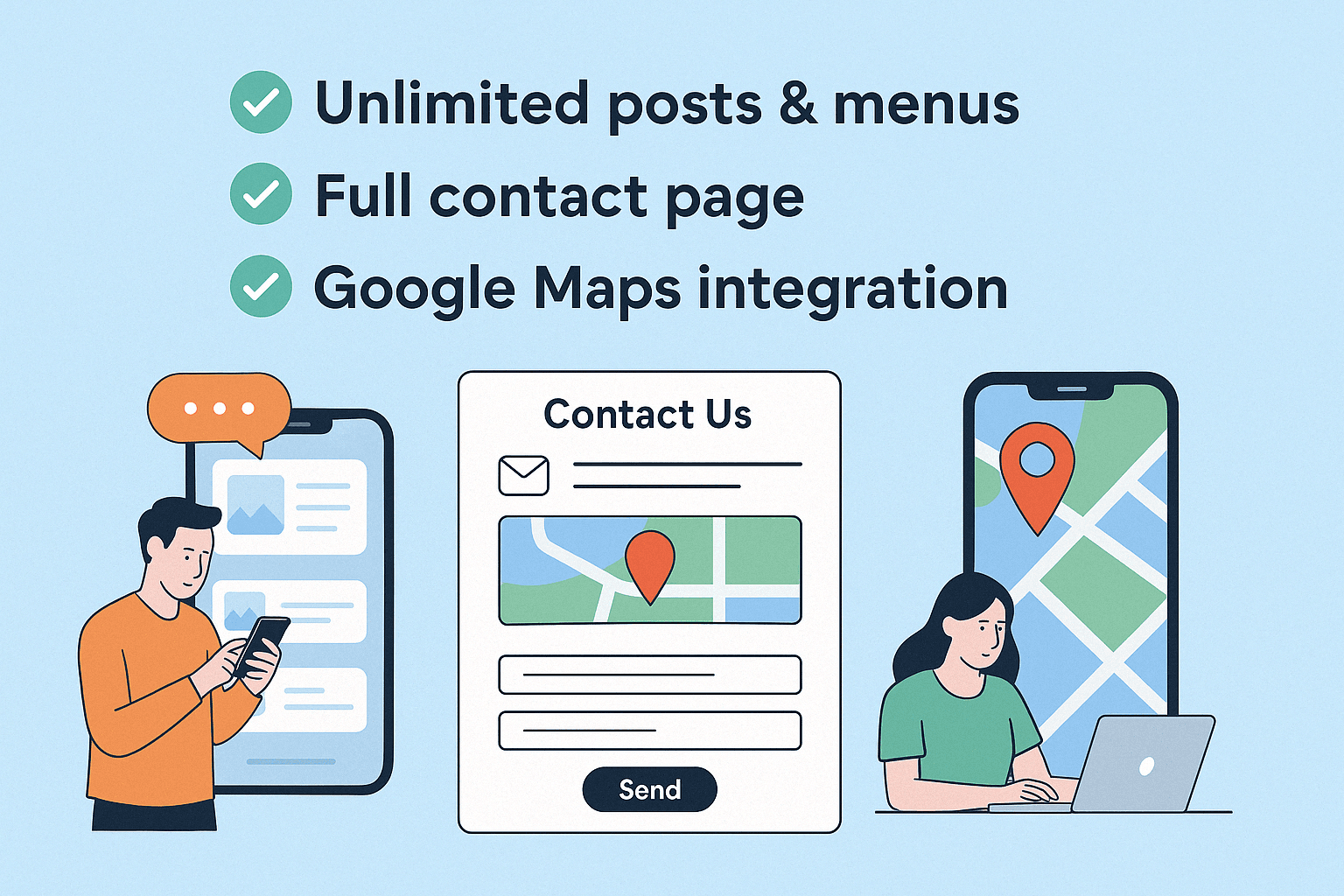
A clear public business profile for customers
Individual pages for services, products and other content
Structured data for search engines
Machine-readable resources for crawlers and AI systems
Information that the business owner can update from one dashboard
Openleet cannot guarantee that an AI assistant will recommend a particular business. No responsible platform can make that promise.
What it can do is help a business publish clearer, more complete and more accessible information—giving customers and digital systems better material from which to understand it.
What should your business prioritize?
Ask what your customers need before choosing you.
If visual ability is the product, invest appropriately in a distinctive visual experience. Your website should demonstrate your creative standard.
If your customers primarily need facts, confidence and a clear next step, begin with information:
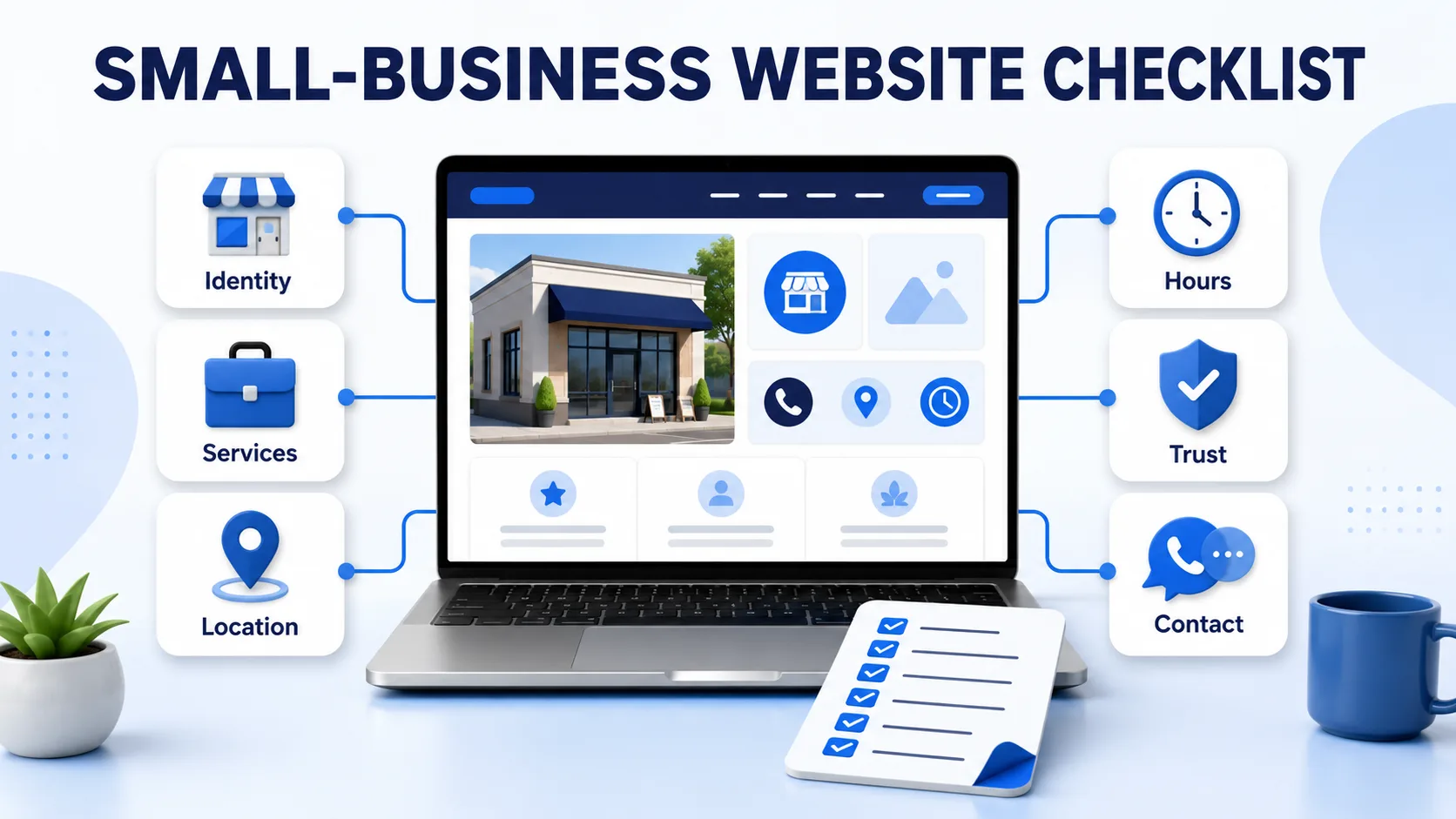
Explain every important service.
Publish accurate hours and contact details.
Define your location and service area.
Answer common customer questions.
Present qualifications and trust signals.
Clarify pricing or explain how estimates work.
Keep the information current.
Make it accessible on mobile devices.
Use appropriate structured data.
Ensure people and machines can understand the same business.
Once that foundation is established, design can make the experience more appealing, memorable and persuasive.
The final answer: data first, design around it
So, which matters more: website design or business data?
For most local and service businesses, reliable business data must come first.
Design attracts attention and influences trust. Business information establishes relevance, answers questions and helps customers make decisions. In an environment where an AI assistant or search summary may describe a company before the customer opens its website, that information may represent the business even when its visual design is never seen.
The strongest business website is not necessarily the one with the most animation or elaborate effects. It is the one that makes the business easiest to understand, trust and choose.
-- Build the information foundation first. Then use design to make that information work beautifully.